
Winter in Japan, especially the second half of January and all of February, is the country's quietest and most private luxury season. The cherry blossom and autumn foliage crowds are gone, the air is dry and clear enough to put Mount Fuji on display more often than at any other time of year, and the ryokan experience, a hot outdoor bath in cold mountain air, finds its true register. The trade-off is cold rather than crowds, and for travelers who want Japan's great sights without the lines in front of them, that trade is an easy one.
Winter is also the one season with a holiday inside it. The New Year week, roughly December 28 to January 3, is when Japan travels domestically on its own calendar, many restaurants close, and hotels and ryokans charge their highest rates of the winter. We route around it rather than through it: the real winter season, for our purposes, begins once it ends.
At Hitotoki, we are a Japan-based team of luxury travel designers who have built more than 1,000 tailor-made journeys, including winter departures through onsen towns, snow country, and the quiet version of Tokyo and Kyoto that only shows up once the New Year rush has passed. This is the guidance we give our own clients: why the season works, where to spend it, and how far ahead to book it.
Winter in Japan — quick answer
- Best window: mid-January through February, after the New Year holiday ends
- Avoid or plan carefully around: December 28–January 3, Japan's own peak domestic travel week
- Clearest Mount Fuji views of the year: from Hakone, especially winter mornings
- Ryokan experience: one night in Hakone, an outdoor onsen bath in the winter cold
- Snow country: Takayama and Shirakawa-go, under some of Japan's heaviest snowfall
- Typical luxury rate: $1,000–2,500 per person per day, excluding international flights
- Book: 3–4 months ahead for mid-January through February, much earlier for the New Year week itself
Why Winter Is Japan's Quiet Luxury Season
Every other season in Japan has a crowd attached to it. Cherry blossom season draws the heaviest demand of the year, and autumn foliage is close behind; both require booking nine to twelve months out and both put a premium on the best rooms. Winter asks for none of that. Temple gardens that are shoulder to shoulder in April are nearly empty in February, and the handful of weeks when Kyoto's eastern temples belong to you and a few other travelers are winter weeks, not spring ones.
The season also plays to Japan's strengths in ways that are easy to underrate from a brochure. Dry winter air is the reason Mount Fuji is visible more often in December through February than in any other stretch of the year, haze and humidity being the usual culprits that hide it the rest of the time. And the entire culture of the onsen, a hot spring bath taken outdoors, in the cold, sometimes while snow is falling, is built for this season specifically. A ryokan's open-air bath in August is pleasant. In January, it is the whole point.
What winter costs you is comfort at the margins: shorter days, real cold in the mountains, and a need to plan around the one week, the New Year holiday, when the country's own travel calendar takes over. None of that is a reason to avoid the season. It is a reason to route it properly, which is what the rest of this guide covers.
Japan in December: Before the New Year
December is the threshold of winter, and its first three weeks are easy to underrate. The crowds of the autumn foliage peak have gone, Tokyo's winter illuminations are lit, and in Kyoto the last autumn color often lingers in the later temple gardens into the first days of the month. The calendar fills again from Christmas, a couples' occasion in Japan rather than a family one, and the New Year week that follows is the one stretch of the year we route around. A December trip that wraps up by around the 26th sees Japan at its most festive without its busiest week.
The Best Places to Experience Winter in Japan
This guide follows winter along the classic route and the snow country beside it. Hokkaido and Japan's ski resorts are a different trip, built around the slopes; what follows is the winter version of Tokyo, Hakone, Kyoto and the Japan Alps.
| Destination | Winter at its best | Trade-off |
|---|---|---|
| Hakone | Outdoor onsen in crisp mountain air, the clearest Fuji views of the year | Mountain cold, snow on only a few days each winter |
| Kyoto | Empty temple gardens, the rare snow on gold and vermilion | Occasional snow disrupts transit for a day |
| Tokyo | Clear skies, illuminations, the quietest version of a busy city | Short daylight hours |
| Kanazawa | Kenroku-en's yukitsuri ropes against snow, peak snow crab season | Further from Tokyo and Kyoto, needs a dedicated day |
| Takayama & Shirakawa-go | The deepest, most atmospheric snow in our itineraries | Real winter cold, mountain roads |
Hakone in Winter: Onsen and Mount Fuji
If one experience defines winter in Japan, it is a private open-air bath in Hakone, steam rising into cold, clear air, with the mountains around you. Snow falls on Hakone only a few days each winter, so treat it as a bonus rather than a promise: the reliable snow is inland, in Shirakawa-go and Takayama. Hakone's ryokans build their best rooms around exactly this: a bath with a view of the mountains, sometimes of Mount Fuji itself, and a kaiseki dinner served course by course while the cold stays outside. Winter is also when Hakone's famous Fuji views, from Lake Ashi and the ropeway, are at their sharpest, the dry air cutting through haze that softens the mountain in other seasons.
We place a single ryokan night in Hakone within a winter itinerary, typically between Tokyo and Kyoto. One night is enough: the fixed rhythm of a ryokan, dinner at a set hour, breakfast at another, is a wonderful discipline for an evening and a confinement across several. Our ryokan guide covers what to look for in a winter stay specifically, including which rooms have their own outdoor baths rather than a shared one.
Kyoto in Winter: Temples Without the Crowds
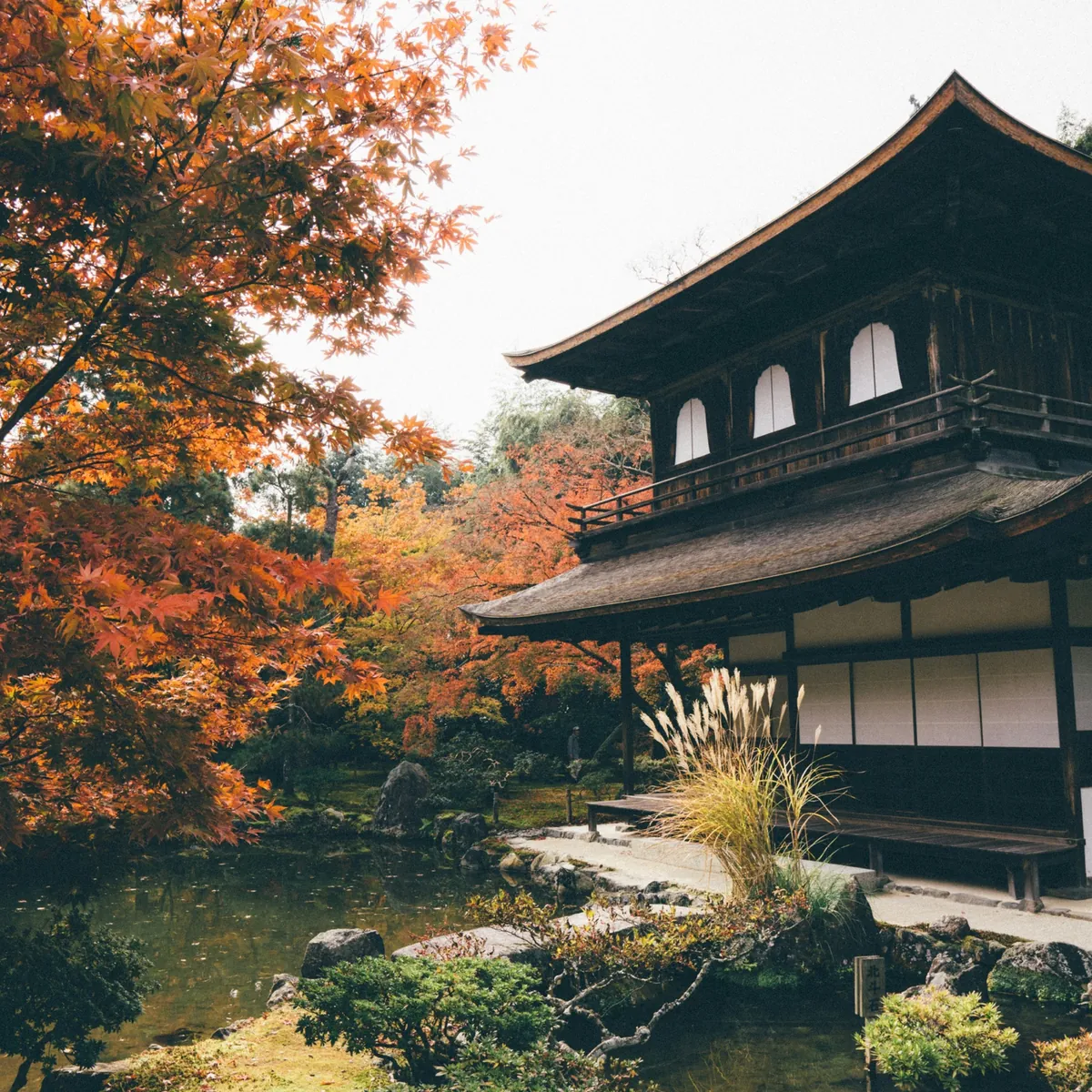
Kyoto in winter is close to a different city from Kyoto in April. The same temples, Kiyomizu-dera, Kinkaku-ji, Nanzen-ji, that draw dense crowds during cherry blossom season are, in late January and February, nearly yours alone, and an occasional dusting of snow over gold leaf and vermilion gates is one of the city's genuinely rare sights. Our guide to where to stay in Kyoto covers the neighborhoods; in winter as in every season, Kyoto is a hotel city, chosen for location rather than for a ryokan experience that belongs in Hakone.
The one caution is weather: Kyoto receives occasional snowfall that, while beautiful, can slow buses and taxis for a few hours. It is rarely more than an inconvenience, and a private vehicle, which is how we move our clients through Kyoto in any case, absorbs it easily.
Tokyo in Winter: Clear Skies and Short Days
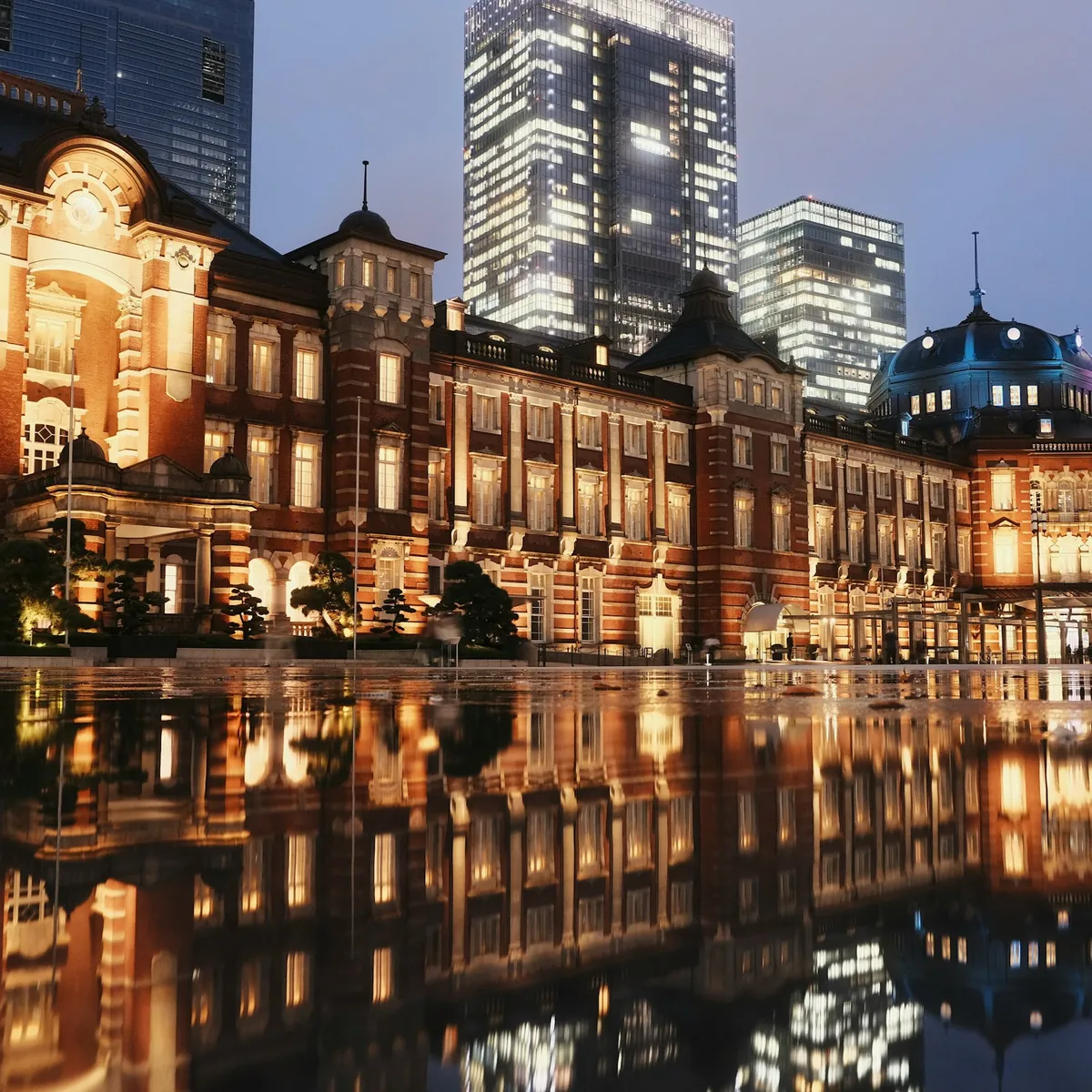
Tokyo in winter trades long evenings for clear, cold, sunny days, the kind where a Mount Fuji view from the right hotel room or observation deck is genuinely more likely than at any other time of year. The city also lights up for the season: illuminated streets and gardens through December and into January give Tokyo's winter evenings a warmth the daytime temperature does not. Our guide to where to stay in Tokyo covers the neighborhoods, including those beside the Imperial Palace gardens, at their quietest on a winter morning.
The practical note is daylight: sunset arrives by late afternoon in December and January, which rewards itineraries that start early and treat the afternoon as the day's second half rather than its last hour.
Kanazawa in Winter: Kenroku-en Under Snow, and Snow Crab
Kanazawa earns a specific mention in winter for one image: the yukitsuri, rope systems strung from poles to protect Kenroku-en's pine trees from heavy snow, standing out against a white garden from November through March. Winter is also peak season for snow crab along the Sea of Japan coast, which Kanazawa's restaurants are known for. The city sits further from Tokyo and Kyoto than Hakone does, so it earns its place in a winter itinerary as a dedicated chapter rather than a day trip.
Takayama and Shirakawa-go in Winter: Japan's Real Snow Country
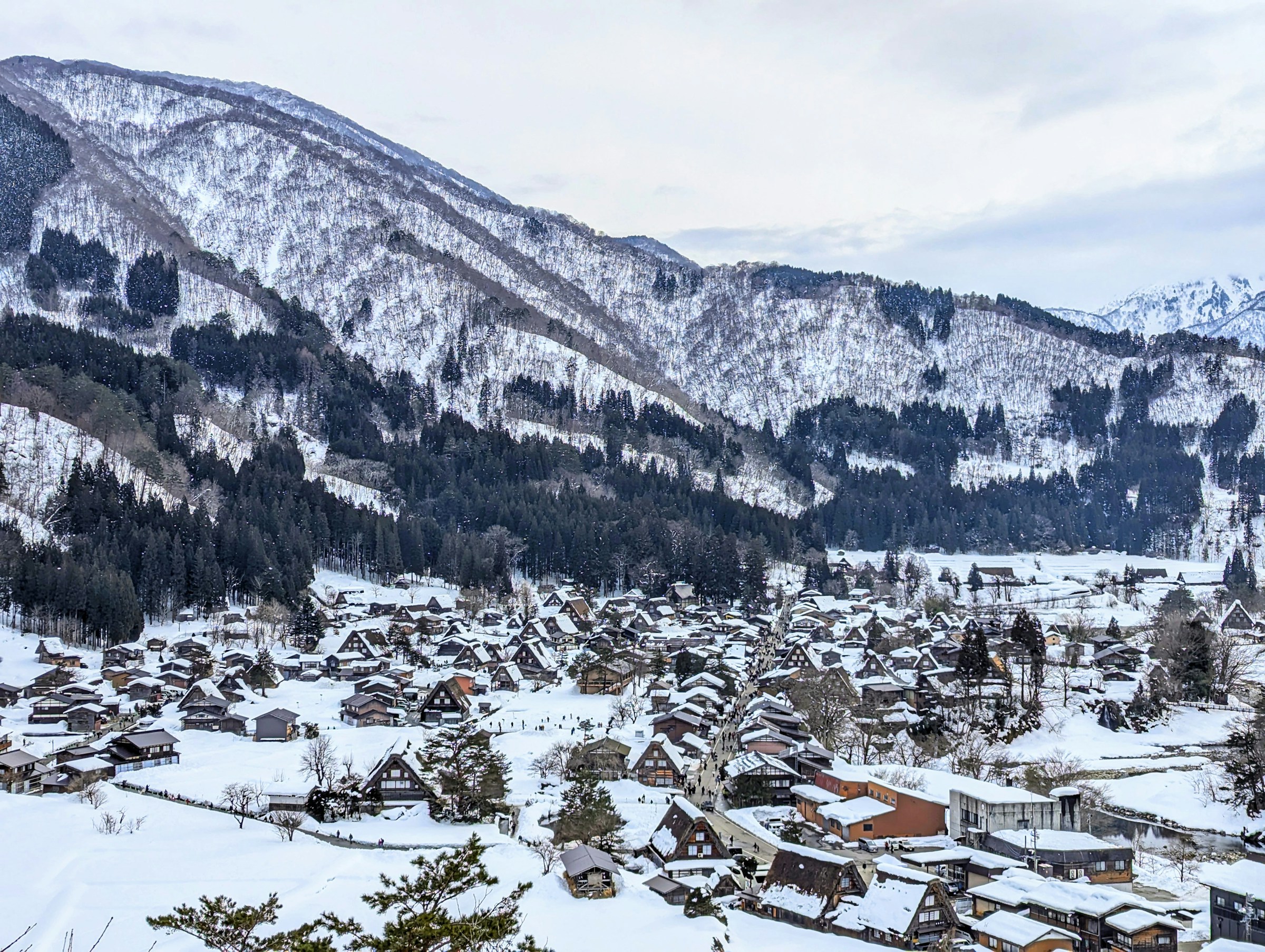
For travelers who want winter at its most dramatic rather than its most comfortable, the route through Takayama and the thatched-roof village of Shirakawa-go is where to find it. The gassho-zukuri farmhouses of Shirakawa-go were built with steep roofs specifically to shed some of the heaviest snowfall in Japan, and a village under a genuine blanket of snow, mountains behind it, is one of the country's most photographed winter scenes for good reason. Takayama's own old town, dark-timbered merchant houses under snow, pairs naturally with it, usually as a single well-placed overnight on the road between Kanazawa and Tokyo.
This is also the coldest chapter of a winter itinerary by a clear margin, and the one most worth a private vehicle rather than public transit, since mountain roads and rail schedules both move more slowly under snow.
Onsen in Winter: What Makes It Different
An onsen, a hot spring bath, exists in every season, but winter is when the contrast that makes it remarkable, scalding water against freezing air, is at its sharpest. Steam rising off an outdoor bath into freezing air, your shoulders just above the waterline, is the experience ryokan brochures describe, and winter is the one season that delivers it as pictured. Snow falling onto the water, when it happens, is the rare bonus.
The etiquette is unchanged by the season: wash thoroughly before entering, no swimsuits, and most properties still restrict visible tattoos, though an increasing number of luxury ryokans now offer private baths that sidestep the question entirely, which is one more reason we favor them for winter stays. Our etiquette guide covers onsen manners in full, worth a read before a first visit regardless of season.
How a Winter Itinerary Fits Together
Our month-by-month guide to visiting Japan sets winter beside every other season; here is how we actually build the weeks within it. A typical winter trip runs 10 to 14 days: three or four nights in Tokyo once the New Year rush has cleared, a single ryokan night in Hakone for the onsen and the Fuji views, three or four nights in Kyoto for the empty temple gardens, and, where the dates allow, a further chapter through Kanazawa and the snow country around Takayama and Shirakawa-go. Our guide to a luxury Japan itinerary for first-time visitors lays out the same shape in more detail for any season, and winter changes the pacing more than the route: shorter days mean earlier starts, and a private vehicle matters more than usual once snow enters the picture. We build each of these as a tailor-made route rather than a fixed package, which is where winter's shorter days and occasional snow actually get planned around rather than discovered on the ground.
When to Book a Winter Trip
Winter sits outside the cherry blossom and autumn foliage peaks, so the booking pressure that drives those seasons to nine or twelve months out does not apply here, with one exception.
- The New Year holiday, December 28–January 3: this is Japan's own peak domestic travel week, and the best ryokans and hotels sell out from Japanese travelers well before international demand even considers the date. We generally route around it rather than through it.
- Mid-January through February: 3–4 months ahead is enough and still leaves a real choice of rooms, including the Hakone ryokans with the best winter onsen setups.
Our booking timeline guide covers every season side by side, and is worth reading if your dates could move between winter and the shoulder months on either side of it.
Mistakes We See in Winter
- Booking through the New Year week by accident. Travelers drawn by the year-end holidays at home sometimes land in the one week where Japan itself is traveling, pay peak rates for flights and rooms, and find half the restaurants closed. Shift a few days either way and the trip changes completely.
- Underestimating the cold in the mountains. Tokyo and Kyoto are manageable in a good coat; Hakone and the route through Takayama and Shirakawa-go are genuinely cold, and the difference catches travelers who packed for the cities alone.
- Treating a ryokan night as a scheduling afterthought. The outdoor onsen is weather-dependent and best enjoyed without a tight departure the next morning. Give the Hakone night room to breathe.
Frequently Asked Questions
Is winter a good time to visit Japan?
Yes, and for luxury travelers it is one of the best. There are no cherry blossom or autumn foliage crowds, the air is clear enough for Mount Fuji to appear more often than in any other season, and the ryokan onsen experience is at its most atmospheric with snow outside.
What is the best month to visit Japan in winter?
January and February, once the New Year holiday (roughly December 28–January 3) has passed. That week is Japan's own peak domestic travel period; the weeks after it are the quietest of the entire year.
Can you see Mount Fuji in winter?
Winter offers the clearest Mount Fuji views of the year, thanks to dry air with far less haze than summer. Hakone, especially its Lake Ashi viewpoints, is the classic place to see it, and mornings are sharpest.
Is December a good time to visit Japan?
Yes, until around December 26. The first three weeks are quiet after the autumn foliage season, the winter illuminations are lit, and Kyoto sometimes keeps a little autumn color into early December. The New Year week that follows is Japan's busiest domestic travel period and best avoided.
Is it too cold to visit Kyoto and Tokyo in winter?
No. Both cities have cold but manageable winters, closer to a crisp autumn than to deep snow, with far more sunny days than overcast ones. Hakone is colder, with snow on a few days each winter; the route through Takayama and Shirakawa-go is genuinely snow-covered, which is why it belongs in a winter itinerary.
How many ryokan nights should a winter trip include?
One, in Hakone. An outdoor onsen bath in the cold mountain air and a kaiseki dinner are the experience at its best; the rest of the trip runs through hotels in Tokyo and Kyoto, better suited to full days of sightseeing.
How far in advance should I book a winter trip to Japan?
Three to four months is enough for mid-January through February. The New Year holiday week is the exception, worth booking earlier, since Japanese travelers reserve it well ahead on their own calendar.
Is a winter trip to Japan cheaper than spring or autumn?
Modestly, outside the New Year week. A full luxury trip generally runs $1,000 to $2,500 per person per day excluding international flights in any season, but winter avoids the room premiums that cherry blossom and autumn foliage command, and leaves a genuine choice of rooms closer to your departure date.
Planning Your Winter in Japan
Winter rewards travelers who are willing to trade a few degrees of warmth for a Japan with no lines in front of its temples and clear skies behind its mountain. It is also the one season with a holiday built into its middle, which makes routing it correctly more important than in any other time of year.
If you would like that routing handled by a team that lives here and watches the forecasts as closely as the calendar, tell us about your trip and we will build your winter in Japan around the right weeks.
Hitotoki Travel is a luxury travel agency based in Japan, specializing in bespoke, tailor-made journeys for discerning travelers. Every itinerary is personally designed to create an unforgettable Japan experience.