
Nara is where Japan begins — the country's first permanent capital, founded in 710, a compact city where sacred deer wander freely among some of the oldest and greatest temples on Earth. The Great Buddha of Todai-ji, the mossy stone lanterns of Kasuga Taisha, and the preserved merchant streets of Naramachi all sit within a single storied park. At Hitotoki, we arrange Nara as a private, fully guided day trip from Kyoto or Osaka — door-to-door private transport, an expert guide, and a day paced entirely around you.
Nara at a Glance
- Best for: sacred deer, ancient temples, living history
- Ideal visit: one full day
- From: Kyoto or Osaka, about 45 minutes
- Pair with: Kyoto, Osaka
- Budget: from $1,000 per person per day
- Best time: autumn (October–November) or spring
Why Visit Nara with Hitotoki
Nara rewards those who arrive with context. To a hurried visitor, it is a park with tame deer and a very large statue; with a knowledgeable guide, it becomes the stage on which Japan first assembled itself — where Buddhism took root, where the imperial court invented much of what the world now recognizes as Japanese culture, and where the deer have been protected as divine messengers for thirteen centuries.
With Hitotoki, the day is seamless from your hotel door and back. No stations, no crowds dictating your pace — just Nara, unhurried.
- Private English-speaking guides who bring eighth-century Japan — and its deer legends — to life
- Door-to-door private transport from your hotel in Kyoto or Osaka — no trains, no luggage lockers, no waiting
- Smart timing — we sequence the day so you meet the Great Buddha and the lantern paths ahead of the biggest crowds
- Beyond the park — the machiya lattice houses, artisan shops, and sake heritage of Naramachi, which most day-trippers never see
- A fully bespoke pace — lingering where you love, moving on when you are ready
Ready to meet the sacred deer of Nara?
Request Your ItineraryExperiences We Arrange in Nara
Our Nara day trips are built around hand-curated experiences that reveal the ancient capital's depth — far beyond a quick photograph with the deer. Here are some of the moments we arrange for our guests:
Todai-ji and the Great Buddha
The Daibutsuden hall of Todai-ji — long the largest wooden building in the world — shelters a 49-foot bronze Buddha cast in the eighth century, an undertaking so vast it nearly bankrupted the young Japanese state. Your guide unfolds the story of its casting, its burnings and rebirths, and the details most visitors walk straight past — including the pillar with a hole said to grant enlightenment to those who squeeze through.
The Sacred Deer of Nara Park
More than a thousand wild deer roam Nara Park, protected for centuries as messengers of the Shinto gods. Many have learned to bow for shika senbei, the special crackers sold throughout the park. Your guide knows where the gentler encounters happen — quiet lanes and mossy clearings away from the main paths — and how to make the meeting as calm for the deer as it is magical for you.
Kasuga Taisha and the Lantern Paths
Nara's great Shinto shrine glows vermilion in a primeval forest, reached along paths lined with some 3,000 stone and bronze lanterns donated over a thousand years. Deer drift between the mossy pillars as if placed there by a painter. We time the visit for the soft light of morning or late afternoon, when the approach is at its most otherworldly.
A Walk Through Naramachi
The former merchant quarter of Naramachi preserves narrow streets of lattice-fronted machiya townhouses — now home to artisan workshops, tea rooms, and centuries-old family shops. Nara is also credited as the birthplace of refined sake, and a tasting at a historic brewery can be woven into the walk. This is the Nara most day-trippers never see.
Isuien Garden
Nara's finest strolling garden composes its scenery like a scroll painting, borrowing the great gate of Todai-ji and the slopes of Mount Wakakusa as its backdrop. It is rarely crowded — a serene pause between the temples, best enjoyed with tea overlooking the ponds.
Kofuku-ji and the National Treasures
The patron temple of the Fujiwara clan rises beside the park with its iconic five-story pagoda, one of the tallest in Japan. Its National Treasure Museum holds the celebrated three-faced Ashura — one of the most beloved Buddhist statues in the country, carved in 734 and still startlingly alive.
A Day Trip, By Design
We arrange Nara exclusively as a full-day private excursion — and that is a deliberate choice, not a compromise. The city's greatest treasures gather within one walkable park, and a single well-paced day with a private guide embraces them all. Your evenings, meanwhile, are far better spent back in Kyoto or Osaka, where your hotel or ryokan, your dinner reservations, and the rhythm of your journey remain undisturbed.
No packing, no luggage transfers, no logistics — just one of Japan's most extraordinary places, folded seamlessly into your stay in Kansai.
Let us design your perfect day in the ancient capital.
Request Your ItineraryA Day in Nara with Hitotoki
Every Hitotoki day trip is fully bespoke, but here is the shape of a classic day in the ancient capital:
Morning: Your guide and driver collect you at your hotel in Kyoto or Osaka for the 45-minute journey by private vehicle. Begin in the old town of Naramachi, strolling the lattice-fronted machiya streets while they are still quiet — artisan shops, hidden courtyards, and the story of Japan's oldest merchant quarter.
Midday: Enter Nara Park, where the sacred deer roam freely — messengers of the Shinto gods, many of them famously polite enough to bow. A relaxed lunch of Nara specialties follows, perhaps kakinoha-zushi, the region's celebrated sushi wrapped in persimmon leaves.
Afternoon: Walk the lantern-lined approach to Kasuga Taisha through the primeval forest, then finish at Todai-ji, where the Great Buddha waits in one of the largest wooden buildings on Earth. Return to your hotel in the late afternoon, in time for dinner.
This is just a starting point. We tailor every detail — pace, timing, lunch, and the balance of temples, deer, and old streets — to your day. Journeys from $1,000/person/day. See our luxury Japan trip cost guide for a full pricing breakdown.
Best Time to Visit Nara
Nara is a rewarding day trip in every season — the deer are always there, and the temples never close their charm. Each season simply changes the light:
- Autumn (October–November): The park turns crimson and gold, and deer wander beneath the maples — Nara at its most painterly, and our favorite season for the day trip.
- Spring (March–May): Cherry blossoms fill Nara Park, with Mount Wakakusa's slopes as a soft green backdrop. Comfortable walking weather all day.
- Summer (June–August): Lush, green, and lively. In mid-August, the Chugen Mantoro festival sees all 3,000 lanterns of Kasuga Taisha lit at dusk — an unforgettable sight.
- Winter (December–February): The quietest months — crisp air, thin crowds, and the Great Buddha in near solitude. In late January, the Wakakusa Yamayaki festival sets the whole of Mount Wakakusa's dry grass alight above the city.
For a comprehensive seasonal guide covering all of Japan, read our month-by-month guide to the best time to visit Japan.
Getting to and Around Nara
Nara sits at the heart of the Kansai region, a short journey from both Kyoto and Osaka. On a Hitotoki day trip, all of it is handled for you:
- From Kyoto: About 45 minutes by private vehicle, door to door from your hotel — no stations, no transfers.
- From Osaka: Also about 45 minutes by private vehicle. The day works equally well from either base.
- In Nara: The essential sights — Todai-ji, Nara Park, Kasuga Taisha, Naramachi — cluster within one walkable area. Comfortable shoes are all you need; your driver repositions the vehicle so every walk is one way.
- Within a longer journey: Nara slots naturally into a stay in Kyoto or Osaka — most of our guests place it midway through their Kansai days as a change of rhythm.
Questions about support during your trip? See our FAQ section for more details.
Frequently Asked Questions About Nara
Absolutely. Nara was Japan's first permanent capital, and its historic heart concentrates more than a millennium of history within a single walkable park — the Great Buddha of Todai-ji, the lantern-lined paths of Kasuga Taisha, and over a thousand sacred deer roaming free among them. Few places in Japan deliver this much wonder in a single day, which is exactly how we recommend experiencing it: as a private, fully guided day trip from Kyoto or Osaka.
A full day is ideal. Nara's essential sights — Todai-ji, Nara Park, Kasuga Taisha, and the old merchant quarter of Naramachi — sit close together, and an unhurried day with a private guide covers them all without ever feeling rushed. Our day trips leave Kyoto or Osaka in the morning and return in the late afternoon, so the visit fits naturally into a broader itinerary.
We arrange Nara exclusively as a day trip, and by design. The city's highlights are compact and beautifully covered in a single day, while evenings are far richer back in Kyoto or Osaka — where your hotel, your dinner reservations, and the rest of your itinerary await. Keeping your base in one place also means no packing, no luggage transfers, and no wasted time.
Either works beautifully — Nara sits roughly 45 minutes by private vehicle from both cities. Most of our guests visit from Kyoto, where they are usually based for several nights, but the day works just as well from Osaka. Your guide and driver collect you at your hotel in the morning and return you in the late afternoon, door to door.
Yes. The deer of Nara are considered messengers of the Shinto gods and have lived alongside the city for centuries. Special deer crackers called shika senbei are sold in the park, and many deer have famously learned to bow for them. Your guide will show you where the calmer encounters happen — away from the busiest paths — and how to interact respectfully with what are, after all, wild animals.
Nara was Japan's first permanent capital, founded in 710, and its legacy is extraordinary: the Great Buddha of Todai-ji — a 49-foot bronze seated in one of the largest wooden buildings on Earth — the 3,000 stone and bronze lanterns of Kasuga Taisha, and the sacred deer that roam Nara Park. Eight sites in the city are inscribed together as a UNESCO World Heritage property, the Historic Monuments of Ancient Nara.
Explore Other Japan Destinations
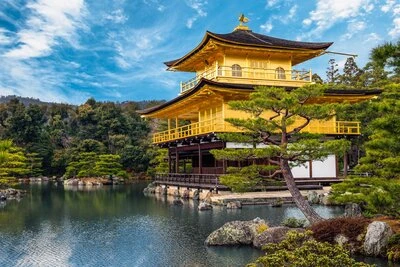
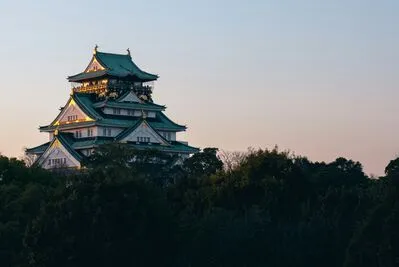
Nara is the perfect day trip from Kyoto's temples and gardens or Osaka's culinary energy — both about 45 minutes away by private vehicle.
Start Planning Your Nara Day Trip
Every Hitotoki trip is fully bespoke. Tell us your travel dates, interests, and style — and we'll fold a perfect day in the ancient capital into your journey. Discover our pricing and booking process, explore our guide to the best places to visit in Japan, or read our Japan etiquette guide for first-time visitors.
Request Your Itinerary