
Four periods a year are worth keeping off your Japan calendar: Golden Week in late April and early May, Obon in mid-August, Silver Week in late September, and the New Year holiday at the very end of December. None of them are a reason to skip Japan. They are a reason to know the calendar before you fix your dates, because in each of these weeks Japan is traveling on its own, domestic terms, and the trains, hotels, and top ryokans a luxury trip depends on fill from the inside before an overseas visitor ever gets to them.
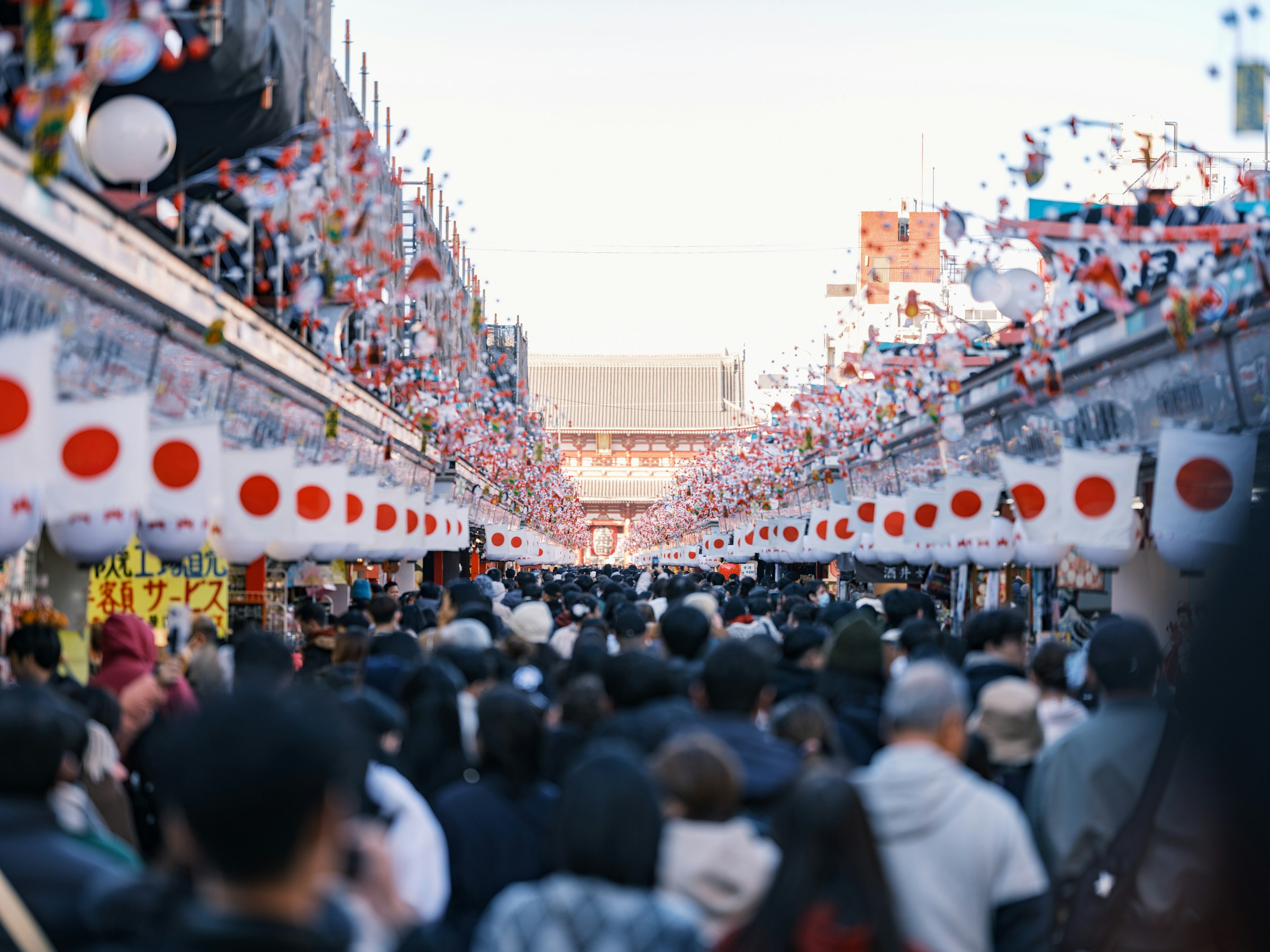
We close for all four and take no trips during them. They are simply not pleasant times to visit Japan: the crowds are at their thickest and the prices at their highest. Shinkansen seats go weeks earlier than usual, ryokans quote well above their typical night, and a temple approach in Kyoto is dense with visitors at an hour that is normally quiet.
At Hitotoki, we are a Japan-based team of luxury travel designers who have built more than 1,000 tailor-made journeys. This is the honest version of when not to visit Japan, why, and which dates we suggest instead.
When not to visit Japan: quick answer
- Golden Week: April 29 – May 5, 2027, Japan's single busiest travel week, trains and top hotels booked out domestically
- Obon: August 13–16, 2027, a quieter but still crowded mid-August holiday, on top of the year's hottest weather
- Silver Week: September 18–23, 2027, a smaller holiday run in late September, with the same rise in crowds and rates
- New Year's week: roughly December 28 – January 3, Japan's peak domestic travel week, with the year's highest rates for flights and rooms, never a cheap or quiet stretch
- Why it matters more for luxury travel: the hotels and guides a bespoke trip depends on are a small, fixed supply, and domestic demand claims it first
- Our position: we close around all four, so a journey with us ends before them or begins after them
Why These Four Periods Are Different
Most of what gets called "Japan's crowded season" is actually two different things wearing the same name. Cherry blossom week in Kyoto or the autumn foliage peak draw a crowd that is largely visitors, domestic and international alike, drawn by a specific, dated natural event. Golden Week, Obon, Silver Week, and the New Year holiday are a different kind of full: they are national holidays, and the crowd is Japan itself, traveling on leave at the same time, on the same trains, toward the same handful of destinations everyone else grew up visiting on these exact weeks.
That distinction matters for how you plan. A foliage trip can often be shifted a region or a few days without losing much: later in Hakone, earlier in Takayama. A holiday week does not move. Golden Week falls on the same string of dates every year by law, Obon by near-universal custom, and the New Year closure by both. There is no later Tuesday that avoids it.
Golden Week: Japan's Biggest Travel Week
Golden Week is a run of four public holidays, Showa Day, Constitution Memorial Day, Greenery Day, and Children's Day, bunched closely enough that most of the country treats the whole stretch as one holiday. In 2027 it runs April 29 through May 5. For the week, shinkansen reservations that would normally be made days ahead sell out weeks ahead, domestic flights fill, and the leading ryokans and city hotels, the same handful of properties a bespoke itinerary is usually built around, see their highest demand and highest rates of the spring.
The trap is the calendar around it. Late April looks like a soft landing after the cherry blossoms, which have finished by then in Tokyo and Kyoto, and a spring trip extended by a few days can walk straight into the holiday without meaning to. We close from late April to the second week of May, so check where your last night falls.
Obon: Quieter Than Golden Week, Still Worth Avoiding
Obon, in mid-August (August 13–16 in 2027), is a Buddhist observance honoring ancestors, and for many Japanese families it is the one other week of the year, alongside New Year's, when returning to a hometown is close to obligatory. It moves fewer people than Golden Week and carries less of a festival atmosphere in the cities, but it still compresses rail and hotel demand into a single short window, arriving on top of August's heat and humidity, already the least comfortable stretch of the Japanese year for walking a city on foot.
Obon is easy to avoid, and most travelers already do it by choosing shoulder-season dates for other reasons. We close through the week leading up to it, and little is lost: August is not a month we would steer anyone toward in the first place.
Silver Week: Late September's Holiday Run
Silver Week is the autumn echo of Golden Week: a cluster of holidays in the second half of September, built around Respect for the Aged Day and Autumnal Equinox Day. How long it runs depends on where those two dates fall. In 2027 they land on Monday, September 20 and Thursday, September 23, and we close from September 18 to 23.
It is smaller than Golden Week, and it arrives just as the summer heat starts to ease, which makes it look like an easy choice on a calendar. It is not: domestic travelers fill the same trains and hotels, and rates rise with them. Start your trip after it and you miss it entirely.
New Year's Week: Not Cheap, Not Quiet
The week running roughly from December 28 to January 3 is Japan's own peak domestic travel period, not a lull between seasons. Many restaurants and smaller shops close for several days, families travel to be together, and the leading hotels and ryokans charge the highest rates of the entire winter for the handful of rooms still open. It is a poor week to expect a quiet, inexpensive Japan, and our own year-end closure runs wider than the holiday itself, from mid-December to mid-January.
What follows it is the opposite. Our own guide to winter in Japan covers the second half of January and all of February, which open up into the quietest, most private stretch of the entire calendar once the New Year closure clears. If your dates are flexible by even a few weeks, that trade is almost always worth making.
The Four Periods at a Glance
| Period | Holiday dates | What's crowded | When we close |
|---|---|---|---|
| Golden Week | April 29 – May 5, 2027 | Shinkansen, flights, top hotels and ryokans nationwide | Late April to the second week of May |
| Obon | August 13–16, 2027 | Rail and hotels for a short window, plus peak summer heat | The week leading up to and through Obon |
| Silver Week | September 20 and 23, 2027 | Trains and hotels for a short window, at higher rates | September 18–23, 2027 |
| New Year's week | ~December 28 – January 3 | Everything, at the year's highest rates; some restaurants closed | Mid-December to mid-January |
What This Means for a Luxury Trip Specifically
A backpacker whose plans change daily absorbs a crowded week differently than a traveler booking a fixed set of rooms months out. The properties and private guides a tailor-made Japan itinerary depends on are a genuinely small supply: a handful of suites at each leading hotel, a short list of English-speaking private guides with the specific expertise a client wants, one or two top ryokans per region. Domestic demand during these four periods claims that same small supply before an overseas request even reaches it, which is a different problem from general crowding and a harder one to solve at any notice.
This is also the main reason a luxury trip and a budget trip experience these weeks so differently. A standard hotel room reopens somewhere once another city's inventory is full. The short list of properties behind a bespoke itinerary in Kyoto or Tokyo does not have that depth.
We Close for All Four
These are not pleasant times to visit Japan: too many crowds, and prices at their highest. So we take no journeys during these periods.
In practice, a journey with us has to end before a closure begins or start after it ends. If your dates touch one of these periods, we will say so plainly and name the nearest dates we can serve.
Mistakes We See
- Extending a spring trip into late April without checking the calendar. A few extra days after the cherry blossoms can land you in the busiest week of the Japanese year, and that catches more travelers than any other mistake on this list.
- Assuming New Year's week is Japan's off-season because it falls in winter. It is the opposite: the most expensive, most booked-out week of the entire winter, followed by the quietest stretch.
- Treating Obon as a non-issue because it is "only" four days. Four days is enough to lose the specific train or ryokan a route was built around.
Frequently Asked Questions
When is the worst time to visit Japan?
There is no bad season, but four periods are worth avoiding: Golden Week (late April into early May), Obon (mid-August), Silver Week (late September), and the New Year holiday (roughly December 28 to January 3). Each is a domestic Japanese holiday, not a tourist season, when crowds and prices peak. We close for all four.
What is Golden Week in Japan and when does it fall in 2027?
Golden Week is a run of four public holidays, Showa Day, Constitution Memorial Day, Greenery Day, and Children's Day, that most of Japan treats as a single holiday stretch. In 2027 it runs April 29 through May 5, and it is Japan's single busiest week for domestic travel, with shinkansen and top hotels booked out well ahead of the dates.
Is Obon a bad time to visit Japan?
It is a quieter version of the same problem. Obon (August 13–16 in 2027) sends many Japanese families back to their hometowns, which compresses rail and hotel demand into a short window on top of the year's hottest, most humid weather. We close for it, and it is easy to avoid: most travelers lose nothing by choosing another month.
What is Silver Week in Japan?
Silver Week is a cluster of holidays in the second half of September, built around Respect for the Aged Day and Autumnal Equinox Day. In 2027 those fall on Monday, September 20 and Thursday, September 23, and we close from September 18 to 23. It is smaller than Golden Week, but crowds and prices rise the same way.
Should I avoid Japan during New Year's week?
Yes. It is the country's peak domestic travel period, many restaurants and small shops close, and the top hotels and ryokans charge their highest rates of the winter for a shrinking number of open rooms. It is never a cheap or a quiet week, and we close from mid-December to mid-January.
What if my only available dates fall during Golden Week or Obon?
We are unable to plan that trip: we close over Golden Week, Obon, Silver Week, and the year-end holidays, and a journey has to end before a closure or begin after it. If your dates can move, even by a couple of weeks, we would be glad to build the trip around the new ones.
Are cherry blossom and autumn foliage weeks the same kind of crowding?
Related, but not identical. Cherry blossom and autumn foliage crowds are driven by a dated natural event and include a large share of visitors, domestic and international alike; Golden Week, Obon, Silver Week, and New Year's are national holidays, where the crowd is Japan traveling on its own calendar. They rarely meet: by Golden Week the blossoms have finished in Tokyo and Kyoto.
How far ahead should I book a trip outside these weeks?
Six months ahead is our general guidance for most of the year, and nine to twelve months for the cherry blossom and autumn foliage peaks. Three to four months is enough for mid-January through February, the quietest stretch of the calendar.
Choosing Dates That Work With Japan, Not Against It
None of these four periods are a reason to rule out a season, a region, or a particular trip. They are a reason to know the calendar before the dates are fixed. Our month-by-month guide to visiting Japan and our guide to when to book a luxury trip are the places to start.
If you are still choosing your dates, tell us about your trip and we will build a tailor-made route around a window that works.
Hitotoki Travel is a luxury travel agency based in Japan, specializing in bespoke, tailor-made journeys for discerning travelers. Every itinerary is personally designed to create an unforgettable Japan experience.