
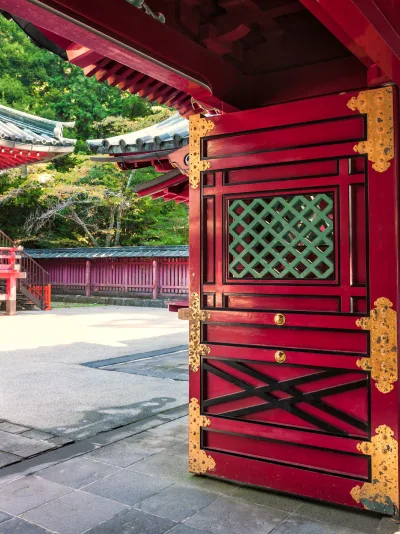
"Never say kekko — magnificent — until you have seen Nikko," runs the old Japanese proverb, and it has held true for four centuries. In the forested mountains north of Tokyo, the shoguns built their most extravagant monument: Toshogu, the gilded mausoleum of Tokugawa Ieyasu, its carvings and gold leaf blazing among cedars three hundred years older than the shrine itself. Around it gather sacred bridges, waterfalls, and a highland lake. At Hitotoki, we arrange Nikko as a private, fully guided day trip from Tokyo — door-to-door private transport, an expert guide, and a day paced entirely around you.
Nikko at a Glance
- Best for: gilded shrines, sacred forests, waterfalls
- Ideal visit: one full day
- From: Tokyo, about 2 hours
- Pair with: Tokyo, Hakone
- Budget: from $1,000 per person per day
- Best time: autumn (October–November) or spring
Why Visit Nikko with Hitotoki
Nikko rewards those who arrive with context — and with the right logistics. Toshogu is not a serene Zen temple but a deliberate explosion of color and symbolism, five million sheets of gold leaf telling the story of how the Tokugawa turned a warlord into a god. Without a guide, it is dazzling; with one, every carving speaks — the three wise monkeys, the sleeping cat, the gate so perfect its builders added a flaw to avoid angering the heavens.
And Nikko's treasures are spread out — shrines in the cedar forest, waterfalls and the lake high above them, reached by a famous road of forty-eight hairpin bends. This is exactly where a private vehicle transforms the day: no bus lines, no station transfers, just the mountain unfolding in the right order.
- Private English-speaking guides who decode Toshogu's symbolism and the shoguns' story behind the gold
- Door-to-door private transport from your hotel in Tokyo — no trains, no bus queues, no timetables
- Smart timing — we reach Toshogu's courtyards ahead of the tour groups, and take the hairpins to the lake when the road is clear
- Beyond the famous gate — the quiet splendor of Taiyuin, the jizo statues of Kanmangafuchi, corners most day-trippers never reach
- A fully bespoke pace — deep among the shrines, up to the waterfalls, or both
Ready to see what the shoguns built in the cedars?
Request Your ItineraryExperiences We Arrange in Nikko
Our Nikko day trips are built around hand-curated experiences that reveal both faces of the mountain — the gilded world of the shoguns and the wild nature that surrounds it:
Toshogu, the Shogun's Mausoleum
The resting place of Tokugawa Ieyasu, founder of the dynasty that ruled Japan for 250 years, is the most lavish religious complex in the country — a UNESCO World Heritage riot of gold leaf, lacquer, and over 5,000 carvings. Your guide reveals the details: the three wise monkeys teaching a child's ideal life, the sleeping cat guarding the passage to Ieyasu's tomb, and the Yomeimon gate so ornate it is nicknamed "the gate you could stare at until sunset."
Taiyuin, the Quiet Masterpiece
A short walk from Toshogu's crowds, the mausoleum of Ieyasu's grandson Iemitsu was deliberately built to face its ancestor in humble deference — and many find it the more moving of the two: smaller courtyards, darker lacquer, bronze lanterns in ranks beneath the cedars, and a fraction of the visitors. It is the corner of Nikko we most love showing our guests.
Shinkyo Bridge and Futarasan Shrine
The vermilion arc of Shinkyo — the "sacred bridge" where a hermit is said to have crossed the river on the backs of serpents — marks the threshold of the holy mountain. Beyond it, Futarasan Shrine has watched over Nikko for twelve centuries, older and quieter than the mausoleums, dedicated to the mountain deities themselves.
Kegon Falls and Lake Chuzenji
Above the shrines, the Irohazaka road climbs forty-eight hairpin bends to a highland world: Lake Chuzenji, formed by a volcano twenty thousand years ago, and Kegon Falls, where the lake plunges 97 meters in a single drop — one of Japan's three great waterfalls, at its most dramatic amid autumn color or spring snowmelt.
The Jizo Statues of Kanmangafuchi
Along a mossy gorge carved by the Daiya river, a procession of some seventy stone jizo statues in red knit caps and bibs gazes over the rapids — the "ghost jizo," so called because no two counts of them ever agree. A short riverside walk, entirely away from the crowds, and one of the most quietly haunting places in Nikko.
Yuba, the Cuisine of the Temples
Nikko's centuries as a monastery town left it a culinary signature: yuba, delicate skims of soymilk that the monks refined into an art. At lunch, a traditional restaurant serves it in course after course — silken, rolled, simmered in mountain broth — a meal as local as the cedars, and far more refined than its humble origins suggest.
A Day Trip, By Design
We arrange Nikko exclusively as a full-day private excursion — and that is a deliberate choice, not a compromise. The shrines, the gorge, and even the highland lake fit beautifully into one well-sequenced day with a private vehicle, while evenings are far richer back in Tokyo — where your hotel, your dinner reservations, and the rhythm of your journey remain undisturbed.
No packing, no luggage transfers, no logistics — just the shoguns' mountain, folded seamlessly into your Tokyo stay.
Let us design your perfect day on the sacred mountain.
Request Your ItineraryA Day in Nikko with Hitotoki
Every Hitotoki day trip is fully bespoke, but here is the shape of a classic day on the shoguns' mountain:
Morning: Your guide and driver collect you at your hotel in Tokyo for the two-hour journey north. Arrive as Toshogu's courtyards open, gold leaf catching the first light through the cedars — the three monkeys, the sleeping cat, and the Yomeimon gate ahead of the tour groups.
Midday: A short walk through the forest to Taiyuin, the quieter mausoleum many guests love most, then a traditional yuba lunch — the delicate temple cuisine Nikko has refined over four centuries.
Afternoon: Either deeper into the sacred district — Futarasan Shrine, Shinkyo Bridge, and the jizo statues of Kanmangafuchi — or up the forty-eight hairpins of Irohazaka to Lake Chuzenji and Kegon Falls. Return to Tokyo in the late afternoon, in time for dinner.
This is just a starting point. We tailor every detail — pace, timing, lunch, and the balance of shrines and mountain scenery — to your day. Journeys from $1,000/person/day. See our luxury Japan trip cost guide for a full pricing breakdown.
Best Time to Visit Nikko
Sitting several hundred meters above Tokyo, Nikko runs cooler and changes earlier — each season redraws the mountain:
- Autumn (October–November): The most celebrated season — the Irohazaka hairpins and the gorge blaze with maples, and Kegon Falls pours through the color. We plan weekday visits and early starts, as Japan knows exactly how beautiful this is.
- Spring (April–May): Late cherry blossoms — Nikko blooms weeks after Tokyo — snowmelt swelling the waterfalls, and fresh green in the cedars.
- Summer (June–August): The classic escape from Tokyo's heat, up to ten degrees cooler by the lake. Hydrangeas line the roads, and the forests are at their deepest green.
- Winter (December–February): The quietest months — gold leaf and vermilion against snow-dusted cedars, and the shrines in near solitude. Crisp, cold, and strikingly photogenic.
For a comprehensive seasonal guide covering all of Japan, read our month-by-month guide to the best time to visit Japan.
Getting to and Around Nikko
Nikko lies about 140 kilometers north of Tokyo, in the mountains of Tochigi. On a Hitotoki day trip, all of it is handled for you:
- From Tokyo: About 2 hours by private vehicle, door to door from your hotel — no stations, no transfers, and the freedom to stop where the view deserves it.
- In Nikko: The shrine district is walkable beneath the cedars, but the wider treasures — the gorge, the lake, the falls — are spread across the mountain. Your driver repositions the vehicle so every walk is one way, and the famous hairpin road becomes a highlight instead of a bus queue.
- Within a longer journey: Nikko slots naturally into a Tokyo stay — most of our guests place it midway through their city days as a complete change of air, or pair it with an onsen night in Hakone on the other side of the capital.
Questions about support during your trip? See our FAQ section for more details.
Frequently Asked Questions About Nikko
Emphatically yes — the Japanese proverb says it best: "Never say magnificent until you have seen Nikko." Toshogu is the most lavish shrine complex in Japan and a UNESCO World Heritage Site, set among giant cedars with sacred bridges, gorges, and one of the country's three great waterfalls close by. As a private day trip from Tokyo, it delivers a complete change of world — from neon to gold leaf and forest — in a single day.
With the right logistics, yes — comfortably. The key is a private vehicle and good sequencing: Toshogu's courtyards early, ahead of the groups, then either the deeper shrine district or the lake and falls in the afternoon. Trying to do it by train and bus consumes hours in queues and timetables; with a guide and driver, one well-paced day embraces the essentials without ever feeling rushed.
We arrange Nikko exclusively as a day trip from Tokyo, and by design. The mountain's highlights fit beautifully into one well-sequenced day, while evenings are far richer back in the capital — your hotel, your dinner reservations, and the rest of your itinerary undisturbed. For a night away from Tokyo, we prefer Hakone, where a luxury onsen ryokan makes the overnight itself the experience.
Toshogu, above all — the gilded mausoleum of Tokugawa Ieyasu, founder of the shogunate that ruled Japan for 250 years, with its celebrated carvings of the three wise monkeys and the sleeping cat. Around it: the vermilion Shinkyo Bridge, the ancient Futarasan Shrine, the 97-meter Kegon Falls, Lake Chuzenji, and the Irohazaka road of forty-eight hairpin bends. The shrines and temples of Nikko are inscribed together as a UNESCO World Heritage Site.
Yes — that is precisely what a private vehicle makes possible. The falls and Lake Chuzenji sit above the shrine district, up the famous Irohazaka hairpin road; by car the climb takes about 40 minutes, against far longer by public bus. We sequence the day so the shrines get the quiet morning hours and the highlands the early afternoon, with the timing adjusted to season and traffic.
They answer different wishes. Nikko is history and grandeur — the shoguns' gilded shrines in an ancient forest, best as a full day trip. Hakone is landscape and relaxation — Mount Fuji views, open-air art, and onsen bathing, which is why we usually recommend it as an overnight ryokan stay rather than a rush there and back. Many of our itineraries include both: Nikko as a day from Tokyo, Hakone as the first night on the road to Kyoto.
Explore Other Japan Destinations
Nikko is the great day trip north of Tokyo — and it pairs naturally with an onsen night in Hakone on the capital's other side.

Start Planning Your Nikko Day Trip
Every Hitotoki trip is fully bespoke. Tell us your travel dates, interests, and style — and we'll fold a magnificent day on the shoguns' mountain into your journey. Discover our pricing and booking process, explore our guide to the best places to visit in Japan, or read our Japan etiquette guide for first-time visitors.
Request Your Itinerary