Japan is unlike anywhere else on Earth — and even the most seasoned luxury travelers can feel genuinely overwhelmed when they arrive for the first time. The culture is rich, the customs are precise, and the unspoken rules can make or break your experience at a world-class ryokan or a three-Michelin-star sushi counter.
After years of designing bespoke luxury itineraries across Tokyo, Hakone, and Kyoto, we have seen firsthand what catches first-time visitors off guard — and what transforms a beautiful trip into an unforgettable one. Whether you are wondering how many days you need in Japan for a first visit (we recommend 10 to 14 days to do it justice) or how to navigate a private onsen without a faux pas, this guide covers the 15 things every luxury traveler needs to know before landing in Japan.
Cultural Etiquette Tips Every Luxury Traveler Should Know
1. Tipping in Japan: Why You Should Never Tip
This is the single most important cultural rule for American travelers: do not tip in Japan. Not at restaurants, not at hotels, not in taxis. Tipping is not just unnecessary — it can be perceived as rude, implying that the person is not being paid fairly by their employer.
Japanese hospitality, known as omotenashi, is rooted in the idea that exceptional service is a point of pride, not something that requires financial incentive. At luxury ryokans and high-end restaurants, the level of attention you will receive is extraordinary precisely because it is woven into the culture, not motivated by gratuity.
If you feel compelled to show gratitude, a sincere verbal thank you (arigatou gozaimasu) or a small, beautifully wrapped gift from your home country is far more appropriate than cash.
2. Shoe Removal Etiquette: Know When and Where
You will be removing your shoes far more often than you expect. Ryokans, temples, traditional restaurants, tea houses, and even some modern establishments require you to leave your shoes at the entrance and step into provided slippers.
A few rules that matter at the luxury level: never step on the raised threshold (genkan) when entering — step over it. When slippers are provided, use them. And when you see a separate pair of slippers near a restroom, switch into those and switch back out when you leave. It sounds like a small thing, but Japanese hosts notice.
For luxury travelers, this means one practical tip: wear shoes that are easy to slip on and off. Complicated laces and tall boots will slow you down and create awkward moments at the entrance of a kaiseki restaurant.
3. Chopstick Etiquette in Japan: Essential Dos and Don'ts
Chopstick etiquette in Japan goes well beyond knowing how to hold them. At a high-end dining experience — particularly kaiseki — these rules are taken seriously.
Never stick your chopsticks vertically into a bowl of rice. This mirrors a funeral ritual and is deeply offensive. Never pass food from chopstick to chopstick, as this also echoes funeral customs. When not using your chopsticks, place them on the provided rest (hashioki), never across the top of your bowl.
At luxury restaurants, the staff will be gracious if you make a mistake — but knowing these basics shows respect and elevates the entire experience. If you are not confident with chopsticks, it is perfectly acceptable to ask for a fork. No one will judge you.
4. Onsen Etiquette: What Luxury Travelers Need to Know
Private onsen (hot spring baths) are one of the most iconic experiences in luxury Japan travel, especially at high-end ryokans in Hakone and the Izu Peninsula. But there are strict rules that apply even in the most exclusive settings.
You must wash thoroughly before entering the bath. Shower stations are provided — use them. You enter the onsen completely nude (swimsuits are not allowed in traditional onsen). Tie long hair up so it does not touch the water. And critically: if you have tattoos, be aware that many onsen — even at luxury properties — prohibit entry due to the cultural association between tattoos and organized crime.
The good news for luxury travelers: many top-tier ryokans now offer private onsen (kashikiri) attached to your room, where tattoo policies do not apply and you can enjoy the experience in total privacy. When we design itineraries, we specifically select properties with private onsen for clients who want this experience without restrictions.
5. Dining Etiquette in High-End Japanese Restaurants
At a kaiseki dinner or an omakase sushi counter, the experience is as much about ritual as it is about food.
Arrive on time — punctuality in Japan is non-negotiable, and at restaurants with only 8 seats and a single seating, being late disrupts everyone. Say itadakimasu ("I humbly receive") before eating and gochisousama deshita ("it was a feast") when finished.
At an omakase counter, eat each piece of sushi within a few seconds of the chef placing it in front of you — it has been crafted at a specific temperature and texture. Do not douse nigiri in soy sauce; a light dip of the fish side is sufficient. And never ask for modifications to the menu. The chef has planned every course.
One luxury-specific detail: at the most exclusive restaurants in Tokyo and Kyoto, you may not be able to make a reservation directly. Many require a concierge from a recognized hotel or a local travel agency to book on your behalf — which is one of the key reasons working with a Japan travel specialist matters.
Essential Practical Tips for Luxury Japan Travel
6. Luggage Forwarding Services: Travel Light Between Cities
This is perhaps the single best-kept secret of luxury Japan travel, and one that transforms the logistics of multi-city itineraries: takkyubin, Japan's luggage forwarding service.
For a modest fee (typically ¥2,000–3,000 per bag), services like Yamato Transport will pick up your luggage from one hotel or ryokan and deliver it to the next — usually by the following day. You travel between cities with just a small day bag, walking through train stations unencumbered.
This is especially valuable when moving between luxury ryokans, where the journey itself — a scenic train through the Japanese countryside, a private transfer through Hakone — should be an experience, not a wrestling match with oversized suitcases. Every itinerary we design includes luggage forwarding as standard.
7. Cash Is King: Even Luxury Establishments Prefer Cash
This surprises almost every American visitor: Japan remains a heavily cash-based society, even at the luxury level. While major international hotels accept credit cards, many high-end restaurants, traditional ryokans, small boutiques, and local experiences are cash-only or strongly prefer it.
Plan to carry ¥30,000–50,000 ($200–350) at all times. 7-Eleven ATMs are the most reliable for international cards and are available nationwide. Do not worry about safety — Japan has one of the lowest crime rates in the world, and carrying cash is completely normal.
One practical note: Japanese ¥10,000 notes are large denomination. Break them at convenience stores or train stations early, because small establishments sometimes cannot make change.
8. Best Time to Visit Japan for Luxury Travelers
Timing can make or break a luxury Japan trip. The two peak seasons — cherry blossom season (late March to mid-April) and autumn foliage (mid-November to early December) — are spectacular but require planning 6 to 12 months in advance for top-tier accommodations.
- Cherry blossom (late March–mid-April): Iconic, breathtaking, and extremely popular. Top ryokans and restaurants book out fast. We recommend booking at least 9 months ahead.
- Autumn foliage (mid-November–early December): Equally stunning, slightly less crowded than cherry blossom season. Kyoto is particularly magnificent.
- Late May–June: An underrated window. The gardens are lush, the crowds are thinner, and the rainy season (tsuyu) is less intense than people fear.
- Avoid: Golden Week (late April–early May) and Obon (mid-August), when the entire country travels domestically and availability disappears.
- Typhoon awareness: September and early October carry typhoon risk. Itineraries should have flexibility built in.
For a detailed month-by-month breakdown, read our complete guide on the best time to visit Japan.
9. How Many Days in Japan for a First Visit? Our Expert Recommendation
This is one of the most common questions we hear, and our answer is consistent: plan for 10 to 14 days if you want to experience Japan properly at a luxury level.
Here is why: Japan rewards slow travel. Rushing from Tokyo to Kyoto in 5 days means you will see the highlights but miss the soul. A 12-day itinerary allows time for Tokyo's energy, Hakone's tranquility, and Kyoto's cultural depth — plus the breathing room to enjoy a private tea ceremony, an unexpected discovery at a local market, or a quiet afternoon in your ryokan's garden.
A 7-day trip is possible but involves compromises. If time is limited, we recommend focusing on two regions rather than trying to see everything. Quality over quantity is the luxury traveler's mantra in Japan.
10. JR Pass for Luxury Travelers: Is the Green Car Worth It?
The Japan Rail Pass is often associated with budget travelers, but the Green Car (first class) option makes it relevant for luxury itineraries as well.
The Green Car offers wider seats, more legroom, quieter cabins, and footrests on the Shinkansen (bullet train). For a multi-city itinerary that includes Tokyo to Kyoto and Kyoto to Hiroshima, the Green Car JR Pass can actually save money compared to buying individual first-class tickets.
That said, if your itinerary is more focused (Tokyo + Hakone + Kyoto only), individual tickets may be more cost-effective. We calculate this for every itinerary and recommend the option that makes the most financial and logistical sense.
Pro tip: Reserve your Shinkansen seats as early as possible, especially during peak seasons. Green Car carriages have fewer seats and fill quickly.
Exclusive Experiences Only Luxury Travelers Can Access
11. Why You Need a Private English-Speaking Guide in Japan
Japan is a country where the richest experiences are hidden behind language barriers, cultural codes, and local knowledge that no guidebook can replace.
A private guide does not just translate — they unlock access. They will explain the symbolism of a Zen garden as you walk through it, negotiate a visit to an artisan's workshop that does not appear on Google, and ensure you are seated at the counter (not a back table) at a coveted sushi restaurant.
For luxury travelers specifically, a guide manages the dozens of micro-logistics that can cause friction: navigating train transfers with precision, ensuring luggage forwarding is coordinated, communicating dietary restrictions to a kaiseki chef, and reading the subtle social cues that make interactions with Japanese hosts seamless.
This is arguably the single most impactful investment you can make in your Japan experience — and the difference between seeing Japan and truly understanding it.
12. Booking Michelin-Starred Restaurants: Timeline and Strategy
Tokyo has more Michelin stars than any other city in the world, and Kyoto is not far behind. But securing a table at the most sought-after establishments requires strategy.
Start planning 1 to 3 months before your trip for most Michelin-starred restaurants. The most exclusive venues — like certain three-star sushi counters — may require 3 to 6 months of advance notice and often do not accept direct reservations from overseas visitors.
Many top restaurants in Japan operate on a referral system: they will only accept bookings from recognized hotels, trusted local contacts, or established travel agencies. This is not elitism — it is a cultural system built on trust and personal relationships (tsunagari). Having a Japan-based partner who can make these calls on your behalf is not a luxury — it is a necessity.
One more note: cancellations and no-shows are taken very seriously. If you cannot make a reservation, cancel well in advance. Failing to show up burns the relationship for everyone who comes after you.
13. Luxury Ryokan vs. 5-Star Hotels: What to Expect
A luxury ryokan is not a Japanese version of a five-star hotel — it is an entirely different concept of hospitality, and understanding the difference before you arrive will dramatically improve your experience.
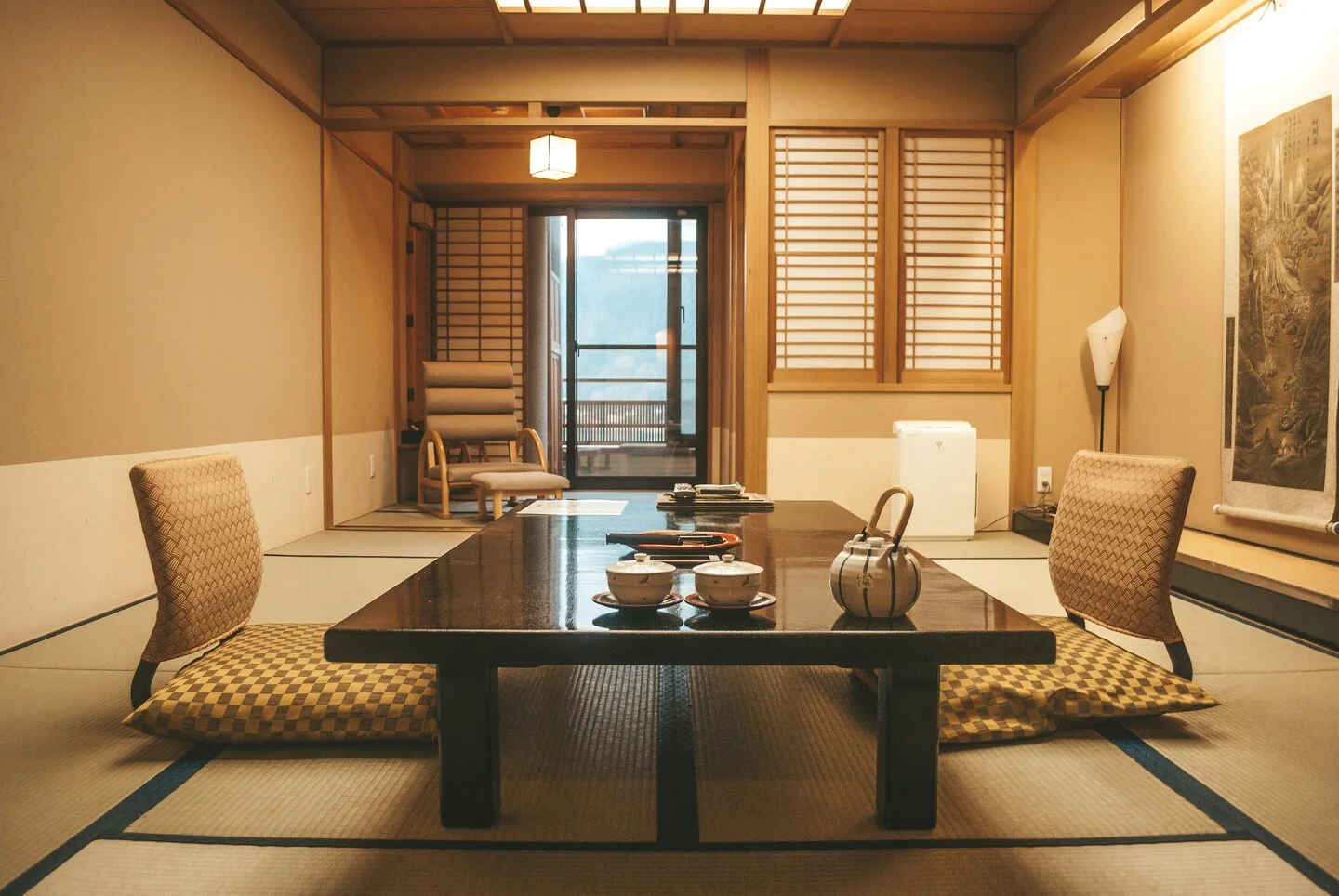
What to expect: Rooms are traditional — tatami floors, futon bedding (laid out by staff each evening), sliding shoji screens, and a private or shared onsen. The experience is structured: you will be greeted with tea and sweets, served a multi-course kaiseki dinner in your room or a private dining area, and offered a yukata (light kimono) to wear throughout your stay.
What surprises luxury travelers: Rooms may feel smaller than Western five-star standards. Walls are thin (they are paper screens, after all). Check-in times are strict, and dinner is served at a set time. This is not a limitation — it is the design.
The price difference is real: A luxury ryokan like Gora Kadan in Hakone or Tawaraya in Kyoto can range from $800 to $2,000+ per night per person, inclusive of dinner and breakfast. The experience is worth every yen — but only if you understand what you are walking into.
We recommend alternating between luxury ryokans and five-star hotels throughout your itinerary. This gives you the best of both worlds: the cultural immersion of a ryokan and the familiar comforts of a property like the Aman Tokyo or the Ritz-Carlton Kyoto. Learn more about our luxury Japan itineraries that blend both styles.
14. Private Temple and Shrine Access: Beyond Tourist Hours
Most visitors experience Kyoto's temples and shrines during regular hours, jostling with crowds for a photo of Fushimi Inari or Kinkaku-ji. But for luxury travelers willing to plan ahead, something far more profound is available.
Certain temples offer private morning visits or after-hours access for small groups — moments of genuine stillness in spaces that are otherwise packed. A private zazen (seated meditation) session with a Zen monk at a Kyoto temple, or an early morning prayer ceremony at a Shinto shrine before the public arrives, are experiences that connect you to Japan at a spiritual level.
These are not advertised online. They require local relationships, advance coordination, and often a cultural intermediary who can make the request in the appropriate way. It is the kind of experience that defines the difference between a luxury trip and a truly bespoke one.
15. Authentic Geisha Experiences: How to Book Properly
The world of geisha (or geiko and maiko in Kyoto dialect) is one of Japan's most misunderstood cultural traditions — and one of its most exclusive. Authentic experiences do exist for visitors, but they require careful, respectful arrangement.
What is real: Private dinners at an ochaya (teahouse) in Gion, where a geiko and maiko perform traditional dances, pour sake, and engage in conversation through an interpreter. These evenings are intimate, refined, and deeply memorable.
What is not: Random "geisha encounters" sold as tours, photo opportunities with women in costume (these are almost always tourists in rental kimono, not actual geisha), or any experience that does not involve a formal introduction through established channels.
Booking an authentic geisha evening requires a connection to the hanamachi (geisha district) — typically through a high-end ryokan, a trusted cultural broker, or a specialized travel agency with established relationships. Expect to invest $500 to $1,000+ per person for an authentic experience, and plan at least 2 to 3 months ahead.
Frequently Asked Questions
Is Japan safe for American travelers?
Extremely. Japan consistently ranks as one of the safest countries in the world. Violent crime is exceptionally rare, and petty theft is almost nonexistent by Western standards. You can comfortably carry cash, leave belongings at a café table, and walk alone at night in virtually any neighborhood. The biggest "risk" is leaving something behind in a taxi — and even then, there is a good chance it will be returned to you.
Do I need to speak Japanese to travel in Japan?
Not necessarily, but it helps immensely to have a guide. Major hotels, train stations, and tourist areas have English signage, and younger Japanese in cities often speak some English. However, at traditional ryokans, local restaurants, and cultural experiences, English is limited. This is one of the strongest reasons to travel with a private English-speaking guide — they bridge the gap and unlock experiences that would otherwise be inaccessible.
What should I pack for a luxury Japan trip?
Pack versatile, layered clothing appropriate for the season. Comfortable walking shoes that slip on and off easily are essential (you will remove them frequently). Bring a small day bag for sightseeing — your main luggage can be forwarded between cities. Leave the formal wear at home; Japan's luxury dining scene is refined but rarely requires a jacket and tie. Smart casual is the standard.
How far in advance should I book a luxury Japan trip?
For cherry blossom season (late March–mid-April) and autumn foliage (November), book 6 to 12 months ahead. The best ryokans sell out quickly for peak seasons. For other months, 3 to 6 months is usually sufficient for a well-planned luxury itinerary.
Is a 7-day Japan trip enough?
It is possible but involves compromises. For a luxury experience, we recommend 10 to 14 days to truly immerse yourself in the culture without rushing. If you only have 7 days, focus on two regions — Tokyo and Kyoto, or Tokyo and Hakone — rather than trying to see everything.
Plan Your Perfect Luxury Japan Journey
These 15 tips will help you navigate Japan with confidence and cultural awareness — but the difference between a good trip and an unforgettable journey lies in the details. The restaurant reservations that require a local contact. The ryokan that only takes bookings from trusted partners. The private temple visit that is not listed on any website.
As a small team of luxury travel designers based in Japan, we know the country intimately and leverage our network of ryokan owners, private guides, and cultural practitioners to create experiences that are simply not available to independent travelers.
Ready to start planning?
Every Hitotoki journey is personally designed. Tell us your dates, interests, and travel style — we will craft a detailed proposed itinerary with no obligation.
Hitotoki Travel is a luxury travel agency based in Japan, specializing in bespoke, tailor-made journeys for discerning travelers. Every itinerary is personally designed to create an unforgettable Japanese experience.